Limited Time Offer
Run a Faster 5K With This Complete Video Training Course

5K Running Accelerator is for intermediate runners (20-30 minutes) who want to improve their 5K time without wasting months piecing together YouTube videos or guessing what works.
LIMITED TIME OFFER: Get lifetime access to the complete video course, 10-week plan, strength training, and monthly Q&A calls — for a one-time payment of just US$68 US$48
I was running around 23/24 minutes for the 5K, but with this system, I've shaved 4 minutes off my 5K time over the past few months running in Old Asics Kayanos.
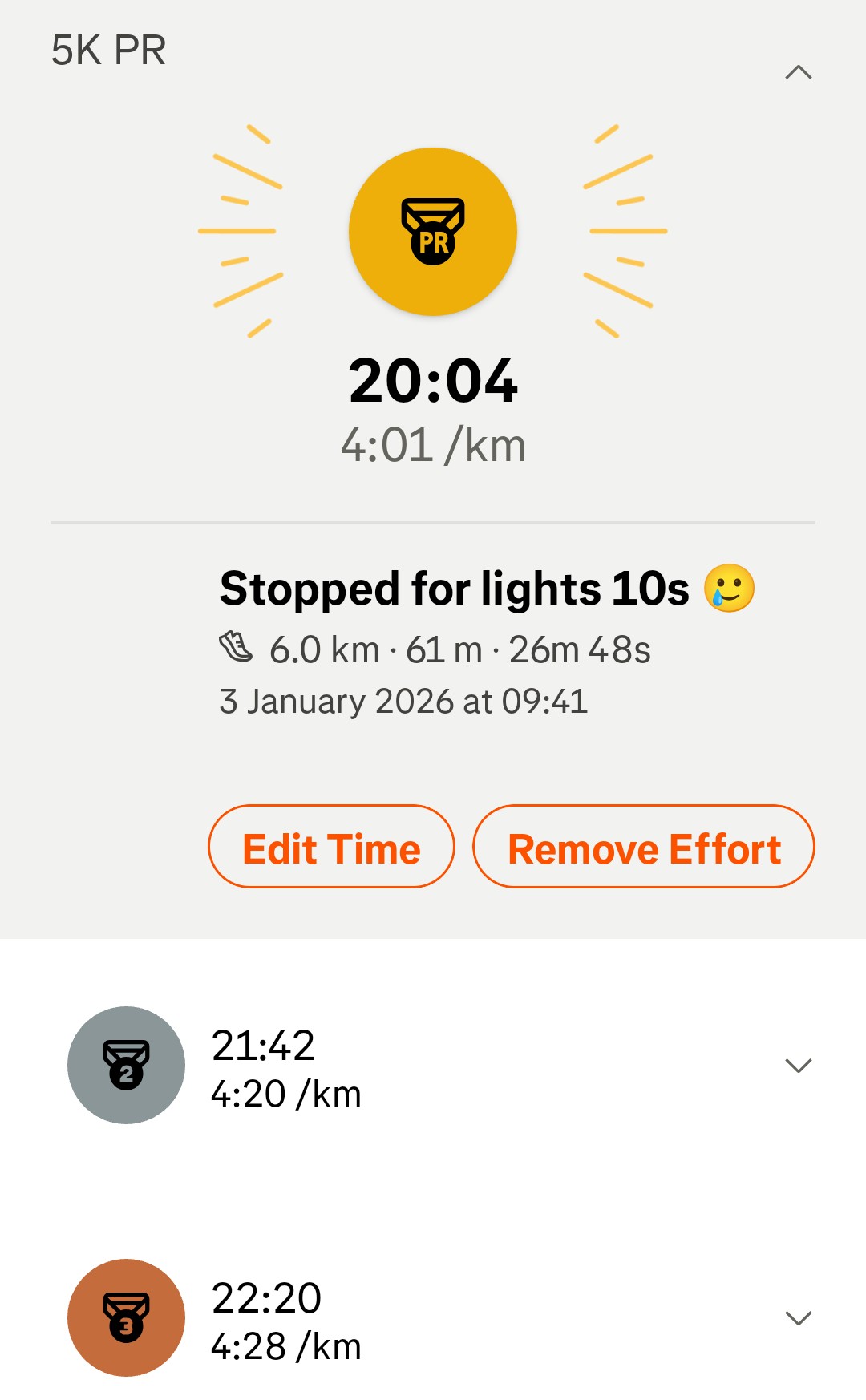
So close to Sub-20...

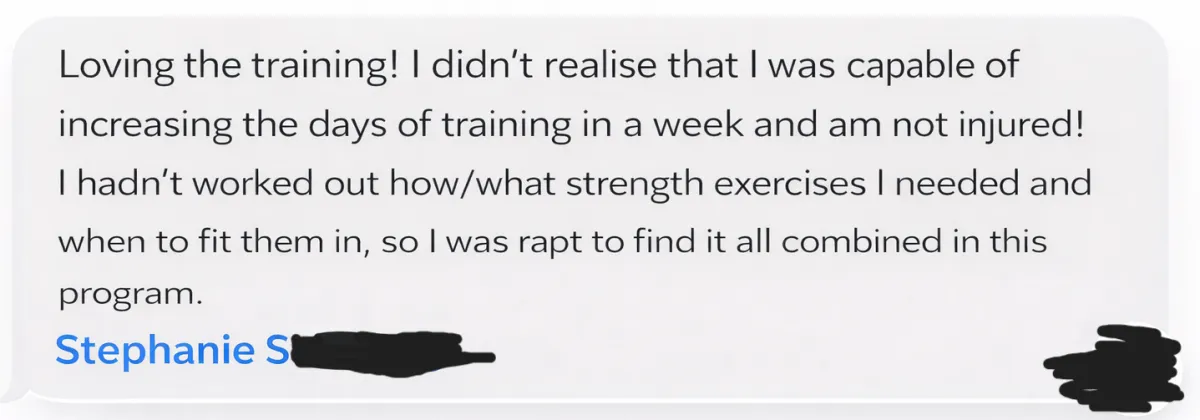
"Loving the training! I didn't realise that I was capable of increasing the days of training in a week and am not injured! I hadn't worked out how/what strength exercises I needed and when to fit them in, so I was rapt to find it all combined in this program.
- Stephanie S
"I didn’t hesitate to sign up with Josh. He has covered the needs of a runner looking to improve their performance. I really believe in the strength exercise component."
- Jenny J
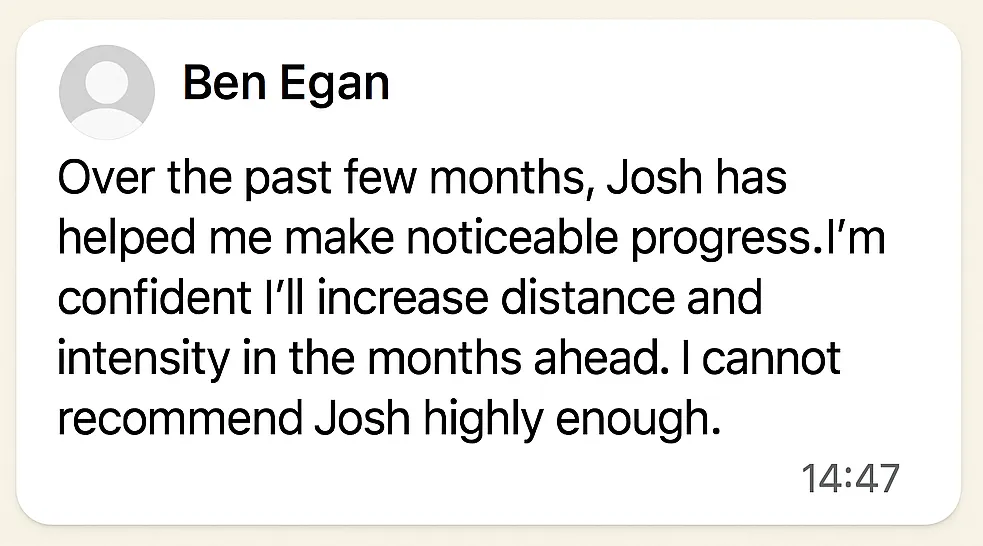
"Over the past few months, Josh has helped me make noticeable progress. I’m confident I’ll increase distance and intensity in the months ahead."
- Ben E
Let's Face It...
You're Not Where You Want to Be
❌
You can hold a great pace... just not for the whole 5K
You start strong and feel good for the first 2K. Then your legs get heavy, your breathing gets harder, and you slow down. You feel
❌
You're running more and more... but your 5K time isn't improving
You're consistent. You're putting in the distance. But your time? Still stuck. Now you're tired, frustrated, and STILL at the same time. The problem isn't effort — it's what you're missing.
❌
You're wasting months on YouTube and Instagram
You've watched tons of videos and reels, and you're STILL not sure if you're doing it right. There's conflicting advice everywhere, and you've wasted months trying to piece it all together
Introducing
5K Running Accelerator
✅
A simple, structured 10-week 5K plan

Have clarity and certainty with a clear plan. Only 4 main run types. No overwhelming jargon. Clear weekly progression. Pacing charts for each run.
✅
A complete strength + plyometric program
Strengthen your key running muscles to improve your running efficiency, speed and VO2 max, and reduce your risk of injury.
✅
Expert guidance and support
Get unstuck fast with monthly live Q&A calls — ask me directly about exercises, injury concerns, or how to modify your running plan to suit you.
What You'll Get with 5K Running Accelerator
DAY 1: Starting Your Training Plan
You get a clear, structured 10-week training plan in both kilometres and miles with pacing charts for each type of run (PDF Download OR Customisable Spreadsheet)
Learn how to use your 10-week training plan and customise it to fit YOUR schedule
Understand your training plan session types - Easy Runs, Tempo Runs, Intervals, and Long Runs - so you know what each workout is designed to do
Learn how to fit strength exercises into your week without overloading
Master essential warm-up exercises to prevent injury and prep your body for every run
DAY 2: Getting Stronger
Discover why strength training is the #1 secret elite runners use to get faster and stay injury-free

Complete strength and plyometrics program with video demonstrations showing proper form and coaching cues
Just 20 minutes, 2x per week with 3 different levels to suit your strength level (even if you've never worked out before!)
Understand how to make each exercise easier or harder to match your strength level.
No gym required
Strengthen your glutes, quads, hamies, calves, core and more!
As you get stronger, it will improve your speed, improve your running efficiency, and reduce your risk of injury.
DAY 3: Training Smarter
Learn how to avoid overtraining and injury while building your fitness
Discover the #1 secret to more energy (and fewer injuries) when you run - and it's not caffeine or supplements (it's sleep!)
Master race week and race day strategy - pacing, tapering, warm-up, and realistic goal-setting
Plan what happens after the 10 weeks so that your progress continues

DAY 4: Running Away from Injuries
Learn the top 7 things to prevent running injuries - so that we can keep you running for the long-term

What You'll Get with the Community
Private Community & Monthly Q&A calls
Get your questions answered, learn from other runners, share wins and receive expert guidance for your running.

Meet Josh
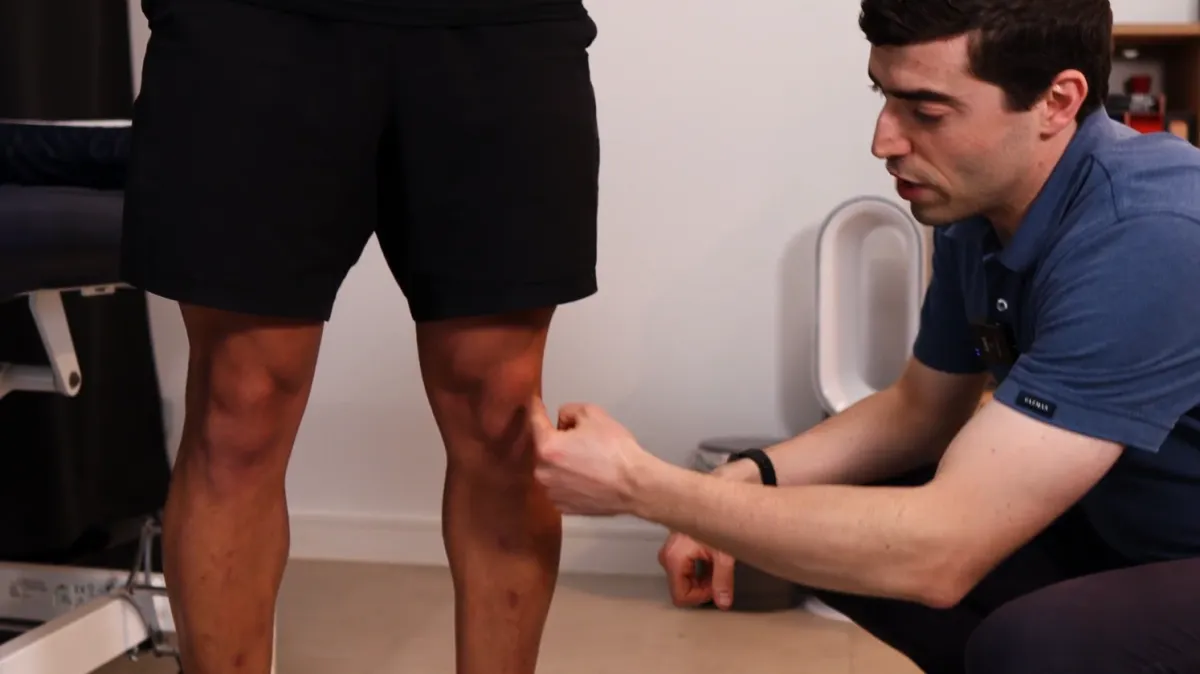
Hi, I'm Josh — and I've worked as a Physiotherapist (Doctor of Physiotherapy) for 8+ years, and helped runners break through plateaus.
I've seen the same problem again and again: 5K runners who weren't failing because of effort — in fact they often ran more and more and more, with little progress.
Rather, it was because they missed 2 critical things:
1. Strength training
Every elite runner does it...
→ Eliud Kipchoge: 2-3x per week
→ Jakob Ingebrigtsen: Known for heavy strength work
Strength is foundational for:
✅ Improving your speed
✅ Increasing running efficiency
✅ Reducing injury risk
But most recreational runners? They skip it. Or they don't know WHAT exercises to do.
2. A simple, structured running plan
Instead, they waste months piecing together:
→ YouTube videos
→ Instagram reels
→ Reddit threads
They're confused about pacing: "Am I running too fast? Too slow? How do I actually get faster?" It's just random training. No clear progression.
So I put together 5K Running Accelerator to have a simple (but complete) resource for 5K runners in ONE place. I've also included a community and live Q&A calls so that you can get support when you need it!
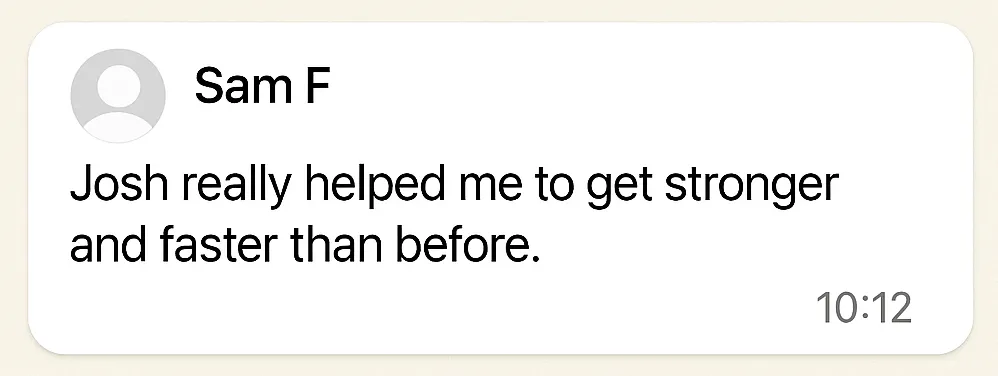
What Others Are Saying

Imagine... knowing EXACTLY what pace to run every session.
Imagine... training without confusion.
Imagine... showing up to your next Parkrun with total confidence.
Imagine... seeing your 5K time drop — finally.
Who Is 5K Running Accelerator For?
You’ve hit a training plateau.
You lack the structure and want a clear, proven plan.
You’ve had past injuries or want to avoid new ones.
You want to feel stronger when you run!
You want to run faster for longer!
You want a clear, simple plan that works with your running.
Who Is 5K Running Accelerator NOT For?
You’re looking for a magic workout that fixes your 5K without actually running or doing strength training
You love guessing your pace and hoping for the best
You enjoy bouncing between random YouTube workouts every week
You’re not willing to run consistently for the next 10 weeks
You want complexity rather than simple, practical guidance
You’re happy staying at the same 5K time year after year
Frequently-Asked Questions
What do I get when I purchase?
Immediately on purchase, you will get access to the Community through which you will access the complete 5K Running Accelerator System - everything you need to run a faster 5K. This includes the 4 Day Video Course, the 10-week training plan (PDF Download and customisable spreadsheet), the complete strength and plyometric program, and the live Q&A calls.
How long do I get access for?
You get LIFETIME ACCESS to everything (this includes any future updates I make to it)!
Can't I learn all of this on the Internet or Social Media?
Yes, technically you COULD spend months:
→ Researching different 5K training plans
→ Finding runner-specific strength exercises
→ Calculating your own pacing zones
→ Figuring out how to combine running + strength without overtraining
→ Watching endless YouTube videos with conflicting advice
What is your time worth? This system will save you months of frustrated time searching for answers online... Your time is valuable! If you want to run a Faster 5K ASAP, then 5K Running Accelerator is for you.
Plus, you get direct access to me via live Q&A calls — not just downloading PDFs and figuring it out alone
I'm training for a 10K/half marathon/marathon. Will this still help me?
Yes. The strength training principles apply to ALL distance runners. The 10-week plan is optimised for 5K, but the strength and plyometrics program and injury prevention protocols work regardless of your race distance.
Can I get faster if I run without a Plan?
You will slowly over time get a bit faster, or you'll plateau. But you'll see the best results with a structured, focussed plan for your running, and a strength and plyometrics program. 5K Running Accelerator gives you both!
Can I get faster if I just run and don't do strength exercises?
You can improve gradually with time and just running, though at some point YOU WILL PLATEAU. Strength exercises and plyometrics will help improve your running efficiency, reduce injury risk, and improve your endurance and fitness. So it's a no-brainer to have these alongside your running!
How do I fit my running and strength training together?
The exercises are designed to only take 20 minutes, 1-2x/week. The training plan integrates it into your week in a way that helps your running. I also give you guidance on how to customise the plan to fit your own schedule.
Will getting stronger make me too bulky/slow me down?
Have you seen any bulky elite distance runners? I didn't think so :) And they don't skip their strength training! This program is designed for distance runners, not bodybuilders.
Do I need gym equipment or can I do this at home?
The strength and plyometrics program is designed to be done at your home with simple weights. No gym required!
How do I know if I'm doing the exercises correctly?
There are video demonstrations for each exercise so you know exactly what you're doing!
Can I really smash my 5K PB/PR or am I beyond hope?
Every runner - no matter where they're at - can get stronger and faster. The slower you are, the more progress you'll actually see. You need to be consistent but you will see results!
Is There a Guarantee?

Absolutely! 5K Running Accelerator has a 7-Day Satisfaction Guarantee. If you are not completely SATISFIED, then contact us within 7 days for a full refund, no questions asked!
YOU HAVE 2 CHOICES
Choice 1: Keep Doing What You’re Doing
→ Stay at the same 5K time for another few months
→ Keep guessing your pace and workouts
→ Feel tired, underprepared, or inconsistent
→ Wonder why your training isn’t clicking
Choice 2: Follow a Clear, Proven Plan
→ Get instant access to 5K Running Accelerator
→ Know exactly what to run and how fast
→ Feel stronger, fitter, and more confident on every run
→ Give yourself a real shot at smashing your 5K PB/PR
One choice keeps things the same.
The other gives you a system to run a Faster 5K.

This site is not a part of the Facebook website or Facebook Inc. Additionally, This site is NOT endorsed by Facebook in any way. FACEBOOK is a trademark of FACEBOOK, Inc.
Note: While I have the knowledge and expertise of a physiotherapist (Doctor of Physiotherapy), any services associated with 1031 Running are not Physiotherapy services.